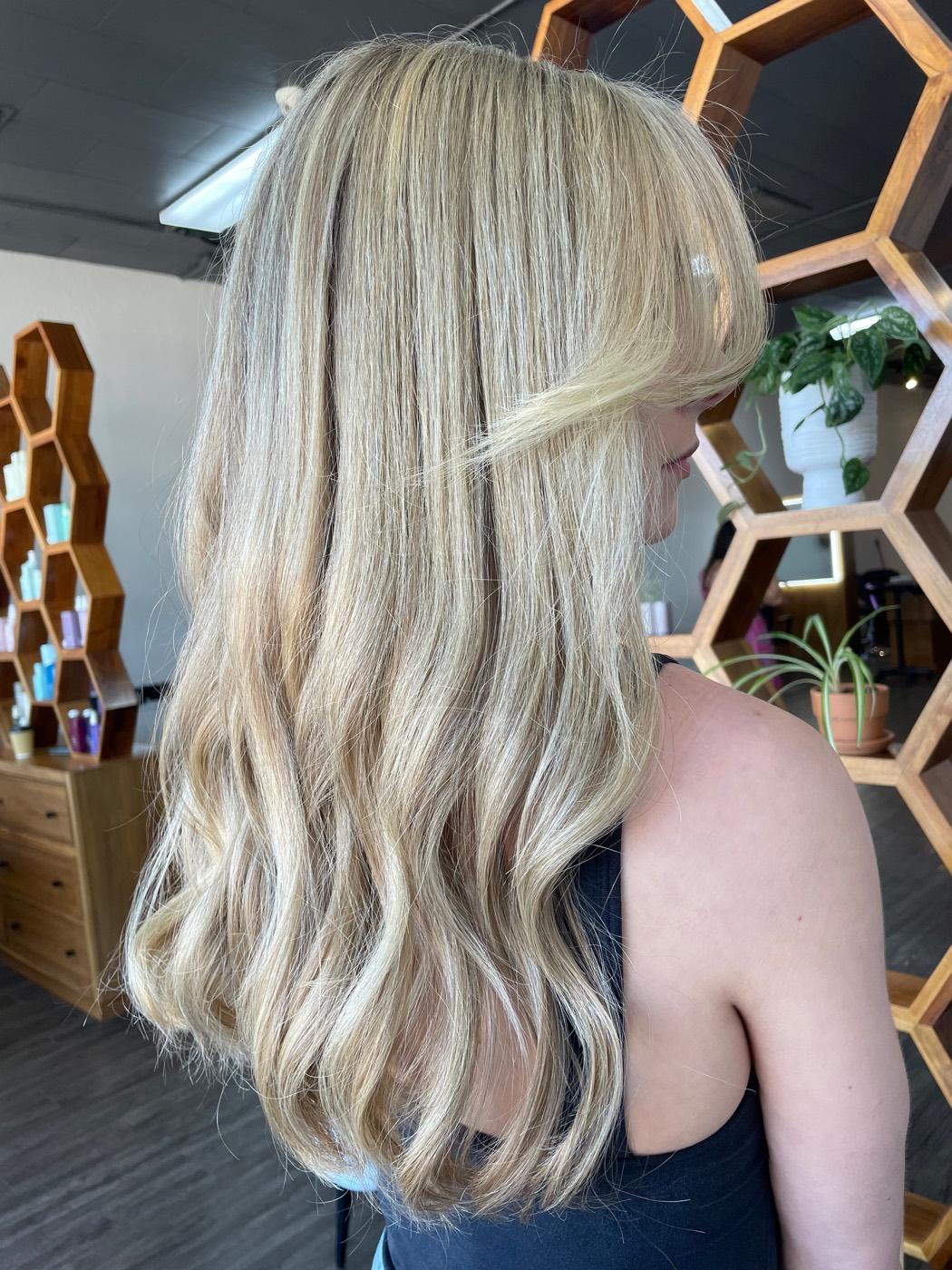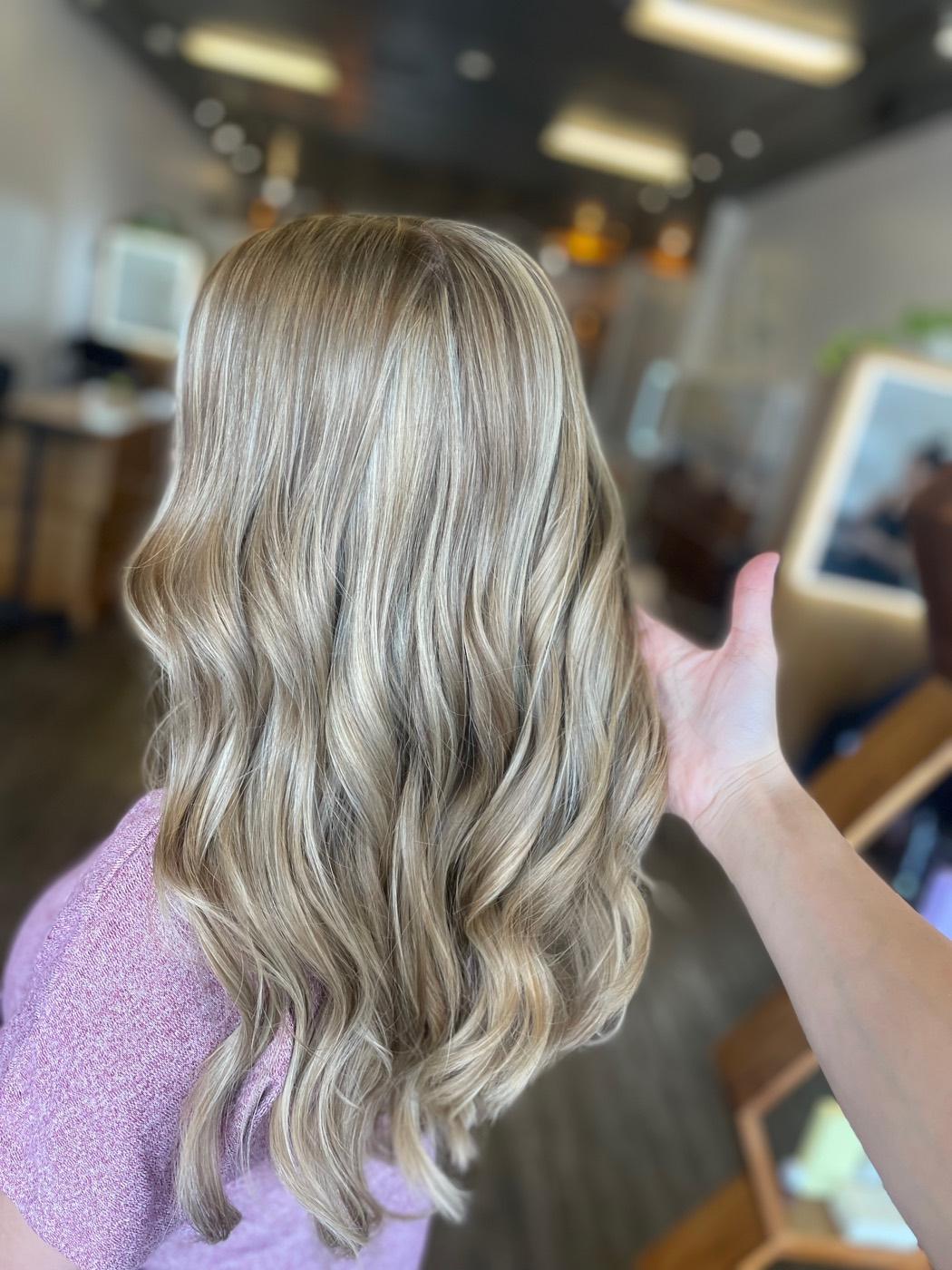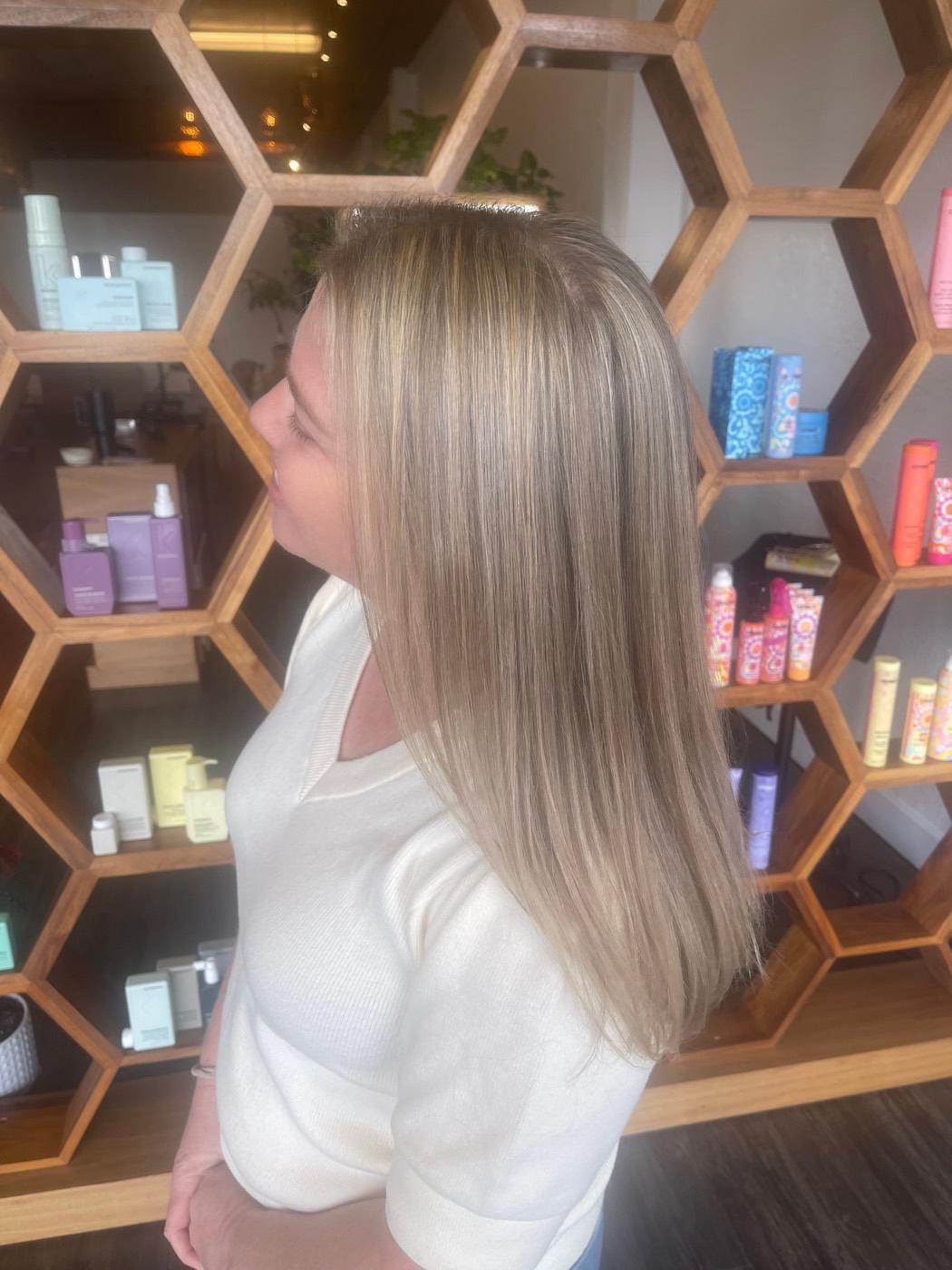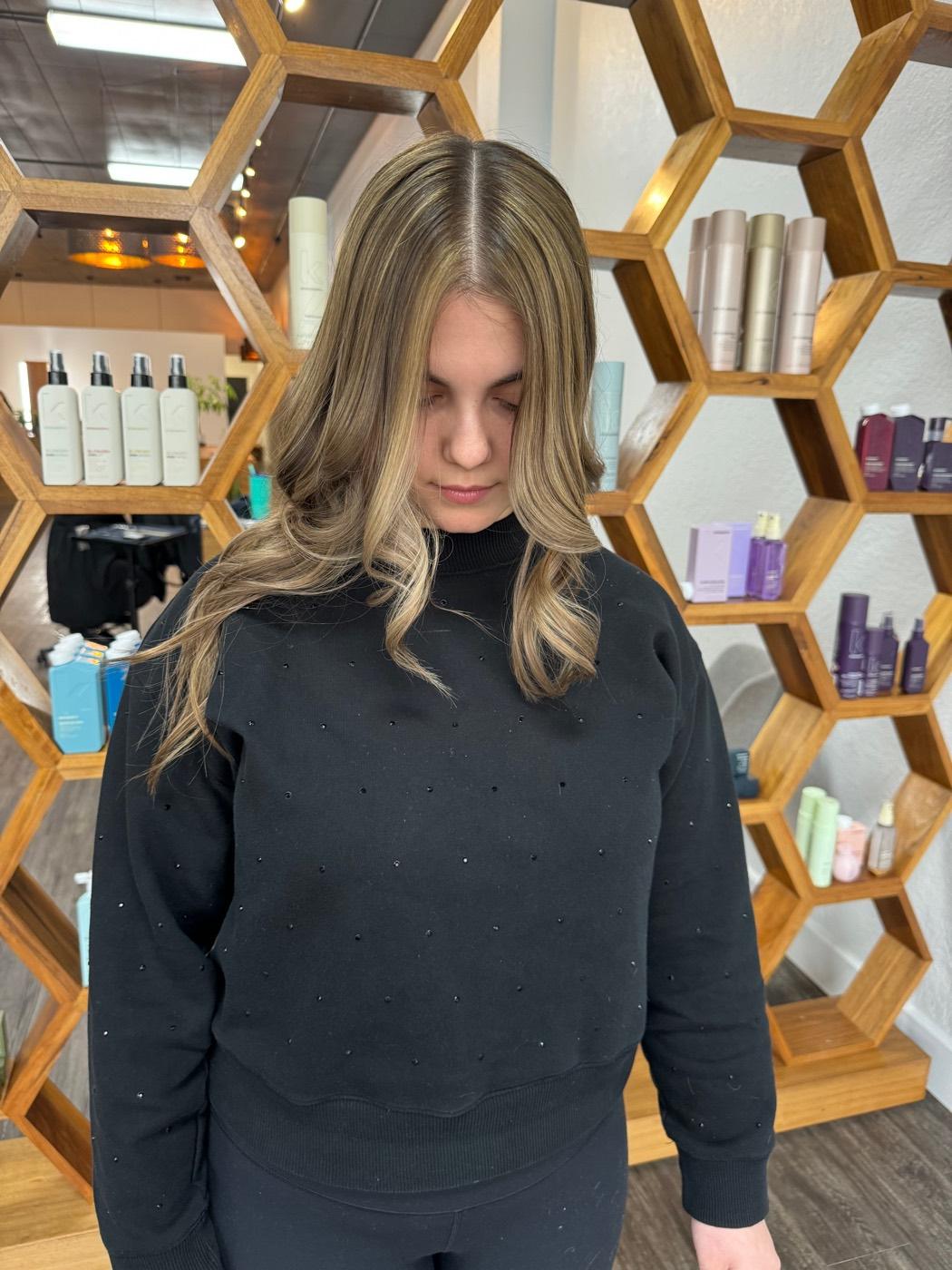
Almost every horror story about blonde hair comes down to one mistake: asking a strand to give up more pigment in one sitting than its structure can survive. Understanding why makes you a much better client — and gets you much better hair.
What lightener actually does
Your hair's color lives in the cortex, under the cuticle. Lightener swells the cuticle open and oxidizes the melanin inside, breaking it into colorless fragments that rinse away. Useful. But the same chemistry also breaks disulfide bonds — the cross-links that give hair its strength and elasticity.
Lose a few and hair is fine. Lose too many and the strand goes soft, stretchy when wet, gummy, and eventually snaps. That is what "fried" means, mechanically.
The ceiling nobody can cheat
Every head of hair has a limit to how many levels it can safely lift in one appointment. That limit is set by:
- Your starting level. Level 2 black has vastly more pigment to remove than level 6 light brown.
- Your color history. Box dye, especially repeated box dye, deposits pigment unevenly and is stubborn. Henna and metallic salts can react badly with lightener.
- Your hair's current condition. Already-porous ends will take lightener faster and further than the mid-lengths, which is why blanket application is a bad idea.
- Density and texture. Fine hair lifts fast and fragile; coarse hair resists.
A good colorist reads all four before mixing anything. That's the whole point of a consultation.
Why the answer is sometimes "two sessions"
If your goal is bright blonde and you are starting dark, the honest plan is usually staged: lift as far as is safe, tone it into something you're happy to wear in public, let the hair rest and rebuild for six to eight weeks, then go again from a higher starting point.
It is slower. It is also the only version where you keep your length. Being told "we'll do this in two visits" is a stylist protecting your hair, not upselling you — a second session costs them a chair they could have filled with a faster service.
Bond builders: what they do and what they don't
Bond-building additives (the category Olaplex opened up, now with several strong competitors) go into the lightener and re-link some of the disulfide bonds as they break. They genuinely work and they are non-negotiable on any serious lightening service.
What they do not do is raise your ceiling to infinity. A bond builder buys you meaningful margin, not permission to take level 3 hair to platinum in one sitting. Any stylist who says otherwise is selling you the back half of a bad haircut.
The seven habits of blondes whose hair stays strong
- Wash two or three times a week, in lukewarm water. Hot water swells the cuticle, strips toner and accelerates fading.
- Heat protectant before every hot tool, no exceptions. Lightened hair has less protein to spare.
- Turn the iron down. Most fine, lightened hair styles perfectly at 300–350°F. 450°F is for coarse virgin hair.
- Use a weekly bond or protein treatment — and alternate it with moisture. Protein without moisture makes hair brittle. Moisture without protein makes it limp. Blondes need both, on rotation.
- Deal with hard water. North Texas water leaves mineral deposits that turn blonde dingy and orange. A shower filter or a monthly chelating treatment genuinely changes the color of your hair.
- Never brush wet hair with a fine-tooth brush. Wet hair stretches up to 30% before breaking. Use a wide-tooth comb or a wet brush, starting at the ends.
- Get a dusting every 10–12 weeks. Removing a quarter inch of compromised ends keeps damage from traveling up the strand.
Warning signs to bring up immediately
Tell your stylist right away if you notice: hair that stretches and doesn't spring back when wet, a gummy or mushy feel when conditioned, small white dots along the strand (incipient breakage), or a sudden change in how fast your ends tangle. All of these are fixable early and very hard to fix late.
The short version
Blonde hair does not have to be damaged hair. It has to be planned hair: an honest consultation, a realistic timeline, bond protection in the bowl, and a home routine that puts back what lightening takes out.
Want a read on your hair before you commit? Text photos of your hair in natural light — dry, unstyled — to (817) 798-1037.
Frequently asked
Does bleaching always damage your hair?
Lightening always costs some structural bonds — that is the chemistry. Damage becomes visible when too many are broken at once. Staged sessions, bond-building additives in the lightener and a protein/moisture home routine keep the cost low enough that hair stays strong and shiny.
How long should I wait between bleaching sessions?
Six to eight weeks is a standard interval for staged lightening. It gives the cuticle time to settle, lets a treatment routine rebuild condition, and means the second session starts from a higher, healthier baseline.